What is milk silk? — — Starting with Lactic Acid in Yogurt
The reason why milk silk is called milk silk must be related to lactic acid, right?
That's right, the source of milk fibers is actually lactic acid. Simply put, milk silk is an organic acid isolated from yogurt; — Lactic acid is synthesized into a polymer with a large molecular structure (polylactic acid) through dehydration polymerization, and then spun into fibers. Therefore, the scientific name of milk silk isPoly Lactic Acid Fiber (PLA fiber).

Rewriting Healthy Milk Silk (PLA Fiber): Born over 200 years ago
- 1780Swedish chemist Carl; Wilhelm· Carl Wilhelm Scheele first isolated an organic acid from yogurt and called it lactic acid.
- 1932DuPont, an American company, used the method of propylene glycol ring opening polymerization to obtain polylactic acid (PLA) with a molecular weight of several thousand; In 1954, DuPont upgraded its technology to obtain higher molecular weight polylactic acid (PLA) materials.
- 1962Cyanamid, a company based in the United States, has found that milk fibers (PLA fibers) have good biocompatibility and degradability, and can replace sensitized surgical sutures.
- 1970Johnson&Johnson Ethicon uses milk silk (PLA fiber) to make surgical sutures that can be absorbed by the human body, eliminating the pain and trouble of suture removal.
- Subsequently, milk silk (PLA fiber) has been increasingly widely used in the field of medical devices, such as slow-release drugs, defatted cotton, etc.
Milk silk has started mass production, will there be less delicious yogurt?
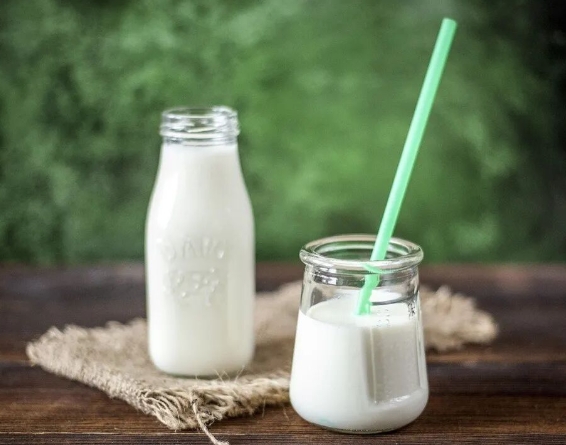
Girls who love to drink yogurt don't have to worry! The source of milk silk, lactic acid, originally came from yogurt. However, when it entered modern industrial production, plant sugars extracted from natural crops rich in starch and cellulose such as corn, cassava, and sugarcane could also be fermented to form lactic acid, which was then dehydrated and polymerized to produce polylactic acid. Finally, milk silk was produced through spinning technology.
Therefore, milk silk is a type ofModern biopolymer materials that come from plants rather than oil and are 100% biodegradable。“ 13th Five Year Plan; The plan clearly states that PLA polylactic acid is one of the key materials for development and an important direction for the development of the international new materials industry.
As recognized by the industry as the most promising; Ecological Materials; What magical effects does milk silk have?
First, let's have a comparison table of the characteristics of breast fibers and other fibers (you can skip it if you don't understand).
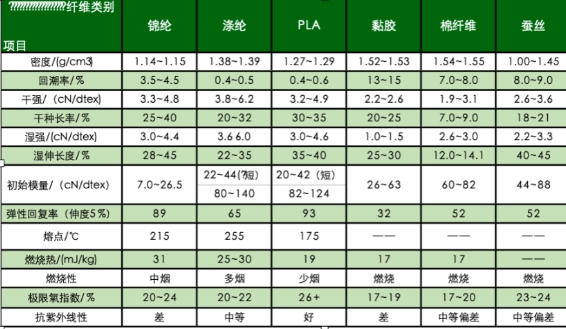
*The data comes from“ Jiaxing University; laboratory
To summarize in human terms, breast silk has the following characteristics:7 excellent features:
1. Weak acid antibacterial activity
Milk silk comes from lactic acid, so there are a large number of free lactic acid radical monomers on the surface, making the milk silk weakly acidic with a pH value of 5-6. It can block the food source of pathogenic microorganisms and has stable antibacterial and antifungal properties. This is a characteristic that other natural fibers and synthetic fibers do not possess.
2. Good extensibility
The physical properties of milk silk are between polyester and nylon, and milk silk products have good stretching comfort, as well as good stiffness and toughness.
3. Good hydrophobicity
The horizontal stripes and pores of milk fibers make it easy for the fibers to form capillary effects, which gives milk fiber products good moisture conductivity and quick drying performance.
4. Biodegradability
Milk silk is 100% derived from natural plants, so it can be completely degraded into water and carbon dioxide in nature, truly taking from nature and returning to nature, achieving a clean carbon cycle. However, the three major synthetic fibers PET, PA, and PP cannot achieve biodegradation and will pollute the environment.
5. Biocompatibility
Milk silk can be hydrolyzed by acid or enzymes in the human body to produce lactic acid, and the final products are carbon dioxide and water. Therefore, it has good biocompatibility and biological absorbability, and is non-toxic and harmless to the human body.
6. Soft and skin friendly properties
The processed milk silk has a silky luster and comfortable hand feel.
7. UV resistance
The molecular structure of milk fibers contains a large number of C-C and C-H bonds, which are insensitive to ultraviolet radiation (wavelengths greater than 290nm). Therefore, milk fibers and their fabrics hardly absorb ultraviolet radiation and have excellent UV resistance.
Summary: The future of sustainable fiber development is loved by all fields; New darling”
By organically combining the several excellent characteristics of milk silk, it can be applied in industrial fields such as baby products, food containers, packaging, and clothing fibers. In the field of biomedicine, polylactic acid materials have been extensively researched and clinically applied in targeted therapy for tumors in orthopedics, thoracic surgery, and maxillofacial surgery.